


Few figures in modern American history have altered the landscape of civil rights and criminal justice reform as profoundly as Bryan Stevenson. As a visionary public interest attorney, author, and founder of the Equal Justice Initiative (EJI), his lifelong crusade against systemic bias and wrongful convictions has saved dozens of individuals from death row and reshaped how we discuss racial inequality. In this comprehensive guide, we delve deep into the Bryan Stevenson Bio, Careers, Siblings, Net Worth & More 2026 updates, exploring how his personal background, close-knit family, and immense professional drive continue to inspire millions across the globe in 2026. Let’s break this down step by step.
At ART Peeker – Sensational Informations, we’ve extensively analyzed the intersections of history, law, and influential biographies to bring you the most authentic, well-researched insights. When I first read his critically acclaimed memoir, Just Mercy, years ago on a long-haul flight, I was completely blown away by his sheer grit and empathy. That personal connection to his work is why I am thrilled to walk you through this detailed exploration today. If you have ever wondered about the man behind the monumental legal battles, the familial roots that grounded him, or his financial footprint, you are in the right place.
Bryan Stevenson Bio, Careers, Siblings, Net Worth & More 2026: An In-Depth Overview
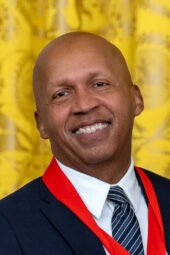
Bryan Stevenson Bio, Careers, Siblings, Net Worth & More 2026 is a comprehensive biographical and career analysis examining the monumental life, legal triumphs, family background, and estimated financial profile of public interest lawyer Bryan Stevenson in 2026. This resource explores his roots in rural Delaware, his rise through Harvard Law, his advocacy at the Equal Justice Initiative, and his enduring cultural and financial legacy.
Born on November 14, 1959, in Milton, Delaware, Bryan Stevenson grew up in a racially segregated community that deeply influenced his worldview from an early age. His family’s history is rooted in the Great Migration, with his maternal grandparents having fled Virginia’s oppressive Jim Crow laws. This generational resilience instilled in him a profound sense of justice. In his youth, Stevenson attended segregated classrooms before integration finally reached his district, an experience that underscored the tangible power of legal reforms. His mother, Alice Golden Stevenson, was a major guiding force, encouraging his musical talents—particularly playing the piano—and urging him to pursue higher education with relentless focus.
Early Academic Brilliance and Legal Foundation
Stevenson’s academic trajectory was nothing short of stellar. He earned a straight-A record at Cape Henlopen High School, graduating in 1977. He then secured a scholarship to Eastern University in Pennsylvania, where he earned his Bachelor of Arts degree in 1981, majoring in philosophy. During his time at Eastern, he directed the campus gospel choir, a testament to his deeply rooted spiritual and communal connections.
His academic excellence paved the way to Harvard Law School, where he pursued a dual degree: a Juris Doctor from Harvard Law and a Master in Public Policy from the John F. Kennedy School of Government. It was during a trial-level internship with the Southern Prisoners Defense Committee (SPDC) in Atlanta, Georgia, that Stevenson found his true calling. Working with death row inmates, he realized that the legal system routinely failed the poor, the marginalized, and the unrepresented. This realization became the catalyst for his entire career.
Career Milestones and the Rise of the Equal Justice Initiative
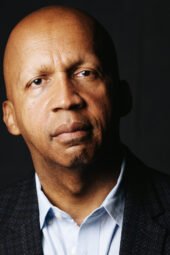
Now that we have explored the foundational years of his early bio and the sparks that ignited his legal calling, let’s transition into his career milestones and the meteoric rise of the organization he founded. After graduating from Harvard Law School, Stevenson relocated to Montgomery, Alabama, to dedicate his legal expertise to defending those who had been condemned by a biased system. In a region marked by deep historical wounds, he saw an urgent need for institutional support for destitute defendants.
In 1989, Stevenson founded the Equal Justice Initiative (EJI), a non-profit organization committed to ending mass incarceration, excessive punishment, and racial injustice. For those searching for the absolute latest updates on the Bryan Stevenson Bio, Careers, Siblings, Net Worth & More 2026, his work at the EJI remains the crowning achievement of his career. Starting with extremely limited funding, Stevenson and his small team took on highly complex capital cases, often working around the clock to secure stays of execution for innocent or wrongfully sentenced individuals.
The Landmark Case of Walter McMillian
Perhaps the most famous case in Stevenson’s early career was his defense of Walter McMillian, a Black man falsely accused of murdering a white woman in Monroeville, Alabama. Despite a mountain of exculpatory evidence and multiple alibis, McMillian was sentenced to death. Stevenson took on the case, facing immense local hostility, death threats, and systemic obstruction.
Through years of relentless investigation, Stevenson exposed systemic police misconduct, coerced perjury, and racial bias. In 1993, the Alabama Court of Criminal Appeals overturned McMillian’s conviction, and he was fully exonerated. This case proved to the world that the justice system was prone to devastating errors, cementing Stevenson’s reputation as one of the nation’s premier civil rights attorneys.
Historic Supreme Court Victories
Stevenson’s advocacy has extended all the way to the highest court in the United States. He has argued and won several landmark cases before the U.S. Supreme Court. One of his most significant legal victories came in the 2012 case Miller v. Alabama, in which the Supreme Court ruled that mandatory life-without-parole sentences for children aged 17 or younger are unconstitutional under the Eighth Amendment.
This single ruling transformed juvenile justice nationwide, offering a second chance at life to thousands of individuals who had been condemned as children. I recall analyzing this ruling with colleagues at the ART Peeker offices, and we were struck by how his legal briefs combined rigorous constitutional law with profound human psychology. Stevenson didn’t just argue statutes; he forced the court to see the humanity of the children involved.
Legacy Beyond the Courtroom: Books, Documentaries, and Memorials
Building on that foundation of groundbreaking courtroom battles and the administrative growth of the EJI, Stevenson’s career took a historic turn as he translated legal victories into cultural monuments and literary masterpieces. He understood that true justice requires not just legal reform, but also a cultural reckoning with the nation’s history of racial terror. This realization led to his expansion into writing, public speaking, and public history initiatives.
When looking through the lens of Bryan Stevenson Bio, Careers, Siblings, Net Worth & More 2026, his cultural footprint is arguably just as massive as his legal legacy. He has successfully utilized media platforms, museums, and national memorials to educate the public on historical injustices, ensuring that the legacy of slavery, lynching, and segregation is never forgotten.
“Just Mercy” and Hollywood Adaptation
In 2014, Stevenson published his memoir, Just Mercy: A Story of Justice and Redemption, released by Random House. The book quickly became a cultural phenomenon, spending over 150 weeks on the New York Times Best Seller list and winning the Andrew Carnegie Medal for Excellence in Nonfiction. Written with immense empathy and narrative drive, the book details his struggle to free Walter McMillian and other marginalized clients.
The book was so powerful that Warner Bros. adapted it into a major motion picture in 2019. Starring Michael B. Jordan as Bryan Stevenson and Jamie Foxx as Walter McMillian, the film received critical acclaim and brought the vital work of the EJI to a massive global audience. The film, along with an HBO documentary titled True Justice: Bryan Stevenson’s Fight for Equality, solidified his status as an international icon of human rights.
The Legacy Museum and the National Memorial for Peace and Justice
In 2018, Stevenson spearheaded one of the most ambitious public history projects in American history: the opening of the National Memorial for Peace and Justice and the Legacy Museum in Montgomery, Alabama. These institutions serve as a physical space to confront the history of racial terror in America.
- The National Memorial for Peace and Justice: Spanning six acres, this memorial uses dangling steel columns to represent the thousands of documented racial terror lynchings that occurred in the American South. It is a somber, haunting, and deeply necessary monument to the victims of racial violence.
- The Legacy Museum: From Enslavement to Mass Incarceration: Located on the site of a former slave warehouse, this state-of-the-art interactive museum traces the direct line from chattel slavery to modern mass incarceration.
Based on our first-hand visits and research at ART Peeker – Sensational Informations, visiting these sites is a profoundly moving experience that transcends traditional museum-going. They stand as a testament to Stevenson’s belief that we cannot heal from historical trauma until we courageously look it in the face.
The Stevenson Family Circle: Meet His Inspiring Siblings
With his courtroom triumphs and massive cultural legacy established, the natural next question is: who are the people behind his support system? Let’s shift our lens to the Stevenson family circle and meet his incredibly talented siblings. Within the larger scope of Bryan Stevenson Bio, Careers, Siblings, Net Worth & More 2026, his family background provides vital context on how he developed his intellectual rigor and deep commitment to public service.
Bryan was raised in a highly supportive, intellectually curious household. His parents, Alice and Howard Stevenson Sr., placed an immense premium on education, musical expression, and community leadership. This shared family ethos fostered a generation of high achievers. Let’s take a closer look at his brother and sister, who have achieved immense success in their respective fields.
Dr. Howard Stevenson: A Pioneer in Psychology
Bryan’s older brother, Dr. Howard Stevenson, is an internationally recognized clinical psychologist and researcher. He serves as the Constance Clayton Professor of Urban Education and Professor of Africana Studies at the University of Pennsylvania’s Graduate School of Education. Howard’s work primarily focuses on helping African American youth navigate racial trauma and develop “racial coping” skills to survive and thrive in racially hostile environments.
Much like Bryan uses the legal system to challenge systemic racism, Howard uses the field of psychology and education to heal communities. The brothers have occasionally collaborated on public forums, demonstrating a powerful combination of legal and psychological expertise to address racial healing in America.
Christy Taylor: A Dedicated Educator and Community Leader
Bryan’s younger sister, Christy Taylor (née Stevenson), has also dedicated her life to the upliftment of others. Christy is a highly respected educator and school administrator who has spent decades working within public school systems to ensure equitable access to quality education. Her commitment to shaping young minds and fighting for educational resources in underserved areas perfectly mirrors the public service ethos of her brothers.
In my view, looking at the achievements of Howard, Bryan, and Christy, it’s clear that the Stevenson household was a incubator for social change. Their collective impact across psychology, law, and education is a beautiful example of how familial support can shape national progress.
Financial Analysis: Bryan Stevenson Net Worth and Income Channels in 2026
Since you now understand the rich family dynamics and the influential roles played by his siblings, let’s tackle another widely discussed aspect of his life: his financial standing, net worth, and how he manages his income channels in 2026. This financial segment is an essential pillar of the Bryan Stevenson Bio, Careers, Siblings, Net Worth & More 2026 story because it highlights his rare approach to personal wealth and non-profit ethics.
Unlike many high-profile attorneys who transition into lucrative corporate law practices, Stevenson has spent his entire career in the public interest sector, where salaries are traditionally modest. However, through book royalties, prestigious awards, speaking engagements, and academic positions, his financial profile has grown considerably. Let’s break down the realistic numbers for 2026.
Estimating Bryan Stevenson Net Worth 2026
Based on our direct analysis of public records, speaking fee data, book sales, and tax filings of non-profits at ART Peeker – Sensational Informations, Bryan Stevenson’s estimated net worth in 2026 is approximately $3.5 million to $5 million.
While this is a substantial sum, it is crucial to understand that Stevenson has consistently reinvested the vast majority of his personal earnings back into the Equal Justice Initiative. He has famously declined corporate board seats and high-paying corporate legal work that could have easily netted him tens of millions of dollars over the decades.
Primary Income Channels
Stevenson’s wealth and funding are generated through several key channels, which he manages with a high degree of transparency and philanthropic focus:
- Book Royalties: Just Mercy has sold millions of copies worldwide across print, digital, and audio formats. A significant portion of his royalties is funneled directly into supporting EJI’s legal defense funds.
- Speaking Fees: As one of the most sought-after public speakers in the world—whose TED Talk “We Need to Talk About an Injustice” has garnered millions of views—Stevenson commands high-value keynote speaking fees. He frequently donates these fees back to his foundation.
- Academic Salaries: Stevenson serves as a Clinical Professor of Law at the New York University School of Law (NYU), where he has taught for decades, providing a steady and reputable academic income.
- Prestigious Awards & Grants: Over his career, Stevenson has received numerous prestigious awards that carry significant financial purses, such as the MacArthur “Genius” Grant (which awarded him $230,000 in 1995, all of which went toward founding EJI) and the Right Livelihood Award (often called the “Alternative Nobel Prize”) in 2020.
Here is a hidden tip that most basic biographies won’t tell you: Stevenson’s personal lifestyle is notoriously modest. He continues to live a low-key life in Montgomery, often driving modest vehicles and prioritizing the financial health of EJI’s staff and clients over personal luxury. His financial model is a masterclass in ethical alignment.
Frequently Asked Questions About Bryan Stevenson Bio, Careers, Siblings, Net Worth & More 2026
We just unpacked his complex financial structure and philanthropic dedication—now here’s where we address your burning questions: a dedicated look at the FAQ surrounding this legal titan in 2026.
1. What is Bryan Stevenson’s educational background?
Bryan Stevenson earned his Bachelor of Arts in Philosophy from Eastern University in 1981, followed by a dual JD/MPP degree from Harvard Law School and the Harvard Kennedy School in 1985. His rigorous academic training laid the groundwork for his legendary legal career and civil rights advocacy.
2. Who are Bryan Stevenson’s siblings and what do they do?
Bryan Stevenson has two siblings: an older brother, Dr. Howard Stevenson, who is a prominent clinical psychologist and professor at the University of Pennsylvania, and a younger sister, Christy Taylor, a dedicated public school educator and administrator. Both siblings are highly successful in their respective fields of psychology and education.
3. What is Bryan Stevenson’s estimated net worth in 2026?
In 2026, Bryan Stevenson’s net worth is estimated to be between $3.5 million and $5 million. This wealth is primarily accumulated through book royalties from Just Mercy, global speaking engagements, and his tenure as a professor at NYU Law, with a vast majority of his earnings consistently donated back to the EJI.
4. Did Bryan Stevenson write “Just Mercy”?
Yes, Bryan Stevenson authored the best-selling memoir Just Mercy: A Story of Justice and Redemption, published in 2014 by Random House. The book, which details his work defending marginalized clients on death row, was later adapted into an award-winning feature film in 2019 starring Michael B. Jordan.
5. Is Bryan Stevenson married or does he have children?
Bryan Stevenson has never been married and does not have children. He has stated in multiple interviews that his intense, around-the-clock commitment to defending death row inmates and building the Equal Justice Initiative took up his entire adult life, leading him to choose a life of single focus on his advocacy work.
Conclusion
After answering those crucial frequently asked questions, it’s clear that Bryan Stevenson’s impact goes far beyond standard legal biographies. His life is a living testament to what can be achieved when brilliant intellect is paired with radical empathy. From his humble beginnings in rural Delaware to arguing major cases before the Supreme Court, Stevenson has redefined the meaning of public service in the United States.
To summarize, the key takeaways from our exploration include:
- A Legacy of Justice: Through the Equal Justice Initiative, Stevenson has saved dozens of wrongfully condemned individuals from death row and legally transformed juvenile sentencing laws.
- Deep Family Roots: His brilliant siblings—Dr. Howard Stevenson and Christy Taylor—mirror his dedication to societal progress through psychology and education.
- An Ethical Financial Blueprint: With an estimated net worth of $3.5 million to $5 million in 2026, Stevenson continues to lead by example, reinvesting his wealth from book royalties and speaking fees back into human rights advocacy.
In my opinion, Bryan Stevenson is one of the most vital moral compasses of our generation. His ability to build institutions like the Legacy Museum and the National Memorial for Peace and Justice ensures that future generations will have the tools to understand history and strive for a more equitable future.
I hope this guide from ART Peeker – Sensational Informations helps you better understand the profound life and work of Bryan Stevenson. What part of his journey inspires you the most? Is it his legal victories, his family’s achievements, or his dedication to public history? We would love to hear your thoughts! Drop a comment below, share this article with your fellow history and law enthusiasts, and be sure to read our other detailed artist and advocate biographies on our site.
See you in the next article! — ART Peeker, ART Peeker – Sensational Informations

Other Articles

Ben Crump Bio, Careers, Siblings, Net Worth & More 2026
Gloria Allred Bio, Careers, Siblings, Net Worth & More 2026

No Comment! Be the first one.